Circuit of the Americas replaces concrete barriers with coasters and pools
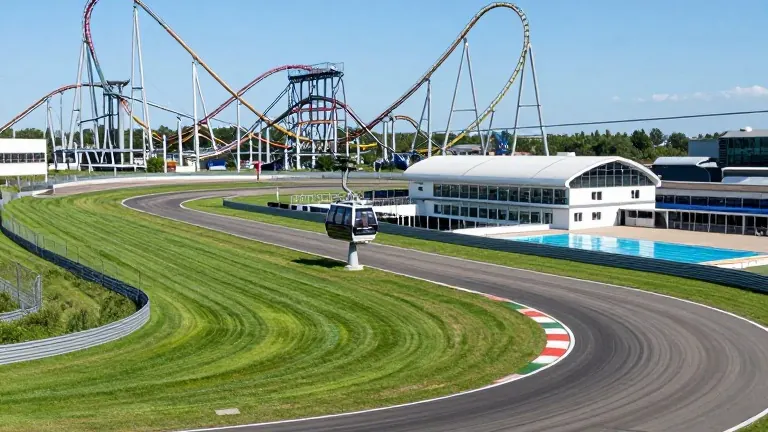
The Austin venue has expanded its hospitality infrastructure, adding two swimming pools and amusement rides to the permanent race track.
By Grace Kim ·
Formula One returned to Austin, Texas, this weekend for its annual race at the Circuit of the Americas.
The venue has evolved from a bare track into a mixed-use entertainment destination. The grassy banks that previously surrounded the circuit are now covered in hospitality structures. One of these buildings connects to the main paddock via a cable car system. The complex features two swimming pools. Roller coasters and other amusement rides now line the venue's fringes.
Kevin Schwanz, a former motorcycle racer, designed the track layout. His firm handled the racing surface, while Herman Tilke’s company built the surrounding infrastructure. The course includes elevation changes, heavy braking zones, and varied corner speeds. Unlike the temporary street circuits in Miami and Las Vegas, COTA is a permanent facility with wide run-off areas instead of concrete walls.
The venue has served as a host for multiple motorsport series. Organizers have used the track for the World Endurance Championship and IMSA events, including the Lone Star Le Mans. These events typically take place in September. The facility has become a standard stop for industry partners and media covering data management and tire development.
The expansion reflects a diversification strategy for the Austin venue. The property now functions as a theme park, a concert venue, and a race track. The addition of rides and pools marks a shift from the original 2012 layout, which featured less landscaping and fewer hospitality options. The American Grand Prix remains one of the most attended events on the Formula One calendar.
COTA is one of three Formula One races held in the United States. It is the only one to use a dedicated, permanent circuit for the event. The venue's growth has turned it into a multi-purpose destination for fans and tourists.
Source: Ars Technica