Clarkson and Hukill rulings shield Illinois riders from helmet-related liability cuts
Courts in the state have ruled that not wearing a helmet does not equal negligence, though insurers still try to use it in settlement talks.
By Julian Vargas ·
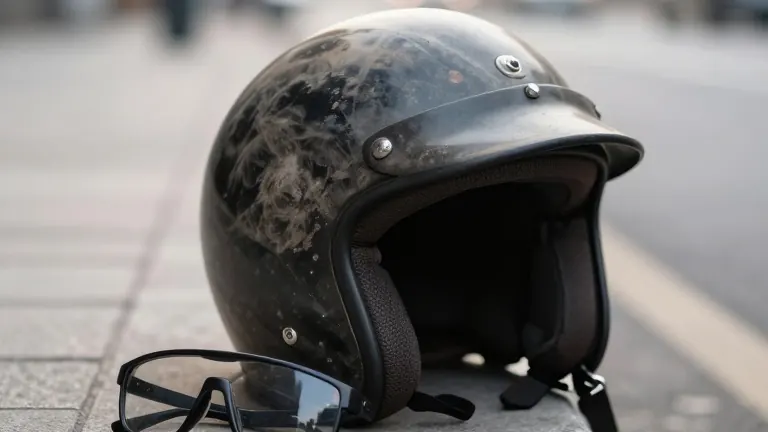
Illinois courts have consistently ruled that a motorcycle rider's failure to wear a helmet does not automatically reduce their injury claim. The state has no law requiring riders to wear helmets, a fact that shapes how judges and juries view fault after a crash. While insurers frequently raise the missing helmet during negotiations, the legal framework keeps it out of the central fault calculation.
The legal position has held steady since the 1980s. In 1985, the Illinois Supreme Court decided in Clarkson that not wearing a seat belt could not be used to show fault or reduce damages. That same year, an appellate court applied similar logic in Hukill, ruling that a missing helmet could not prove comparative negligence. In 1991, another appellate court reaffirmed this stance in Moore, stating that evidence of a missing helmet is generally inadmissible to prove contributory negligence.
These rulings create a specific boundary for what evidence can be presented to a jury. An insurance adjuster may still argue that a helmet would have changed the outcome, but they are citing a point that the courts have already decided to exclude from fault determinations. The legal protection applies because no statute mandates helmet use, meaning the rider is not violating a traffic law by riding bareheaded.
The situation changes if the rider fails to follow the state's eye protection rule. Section 11-1404 of the Illinois Vehicle Code requires operators and passengers to use glasses, goggles, or a transparent shield. Because this is a statutory requirement, an insurer can point to the missing eyewear as a violation, provided the lack of protection played a role in the crash.
Insurers often shift their arguments from fault to injury severity. They may claim that a helmet would have lessened a head injury, thereby reducing the damages owed. An Illinois appellate court has rejected this approach as a method for cutting awards, giving it little legal weight. However, the rider must still prove that the crash caused specific injuries. Gaps in medical treatment can allow an adjuster to argue that an injury is unrelated to the accident.
Riders face strict deadlines for filing lawsuits. Section 13-202 of the state code sets a two-year limit for most injury claims, counted from the date of the injury. If a defect in the road contributed to the crash, the Tort Immunity Act's Section 8-101 generally allows only one year to sue a city or other local public entity. Lawyers advise keeping the motorcycle and gear unrepaired until they are photographed and documented.
The state's modified comparative fault rule under Section 2-1116 reduces awards based on the rider's share of blame. If that share exceeds 50 percent, the claim is barred. Common fault arguments that remain valid include riding too fast, changing lanes without signaling, or having poor visibility due to dark clothing or dim lights.