Likud Demands Netanyahu Serve as Sole Prime Minister in Unity Talks
Hebrew media reports reveal a detailed list of conditions from the Likud party, including a four-year term for the current premier and the inclusion of far-right Otzma Yehudit in any potential coalition.
By News Media House Staff ·
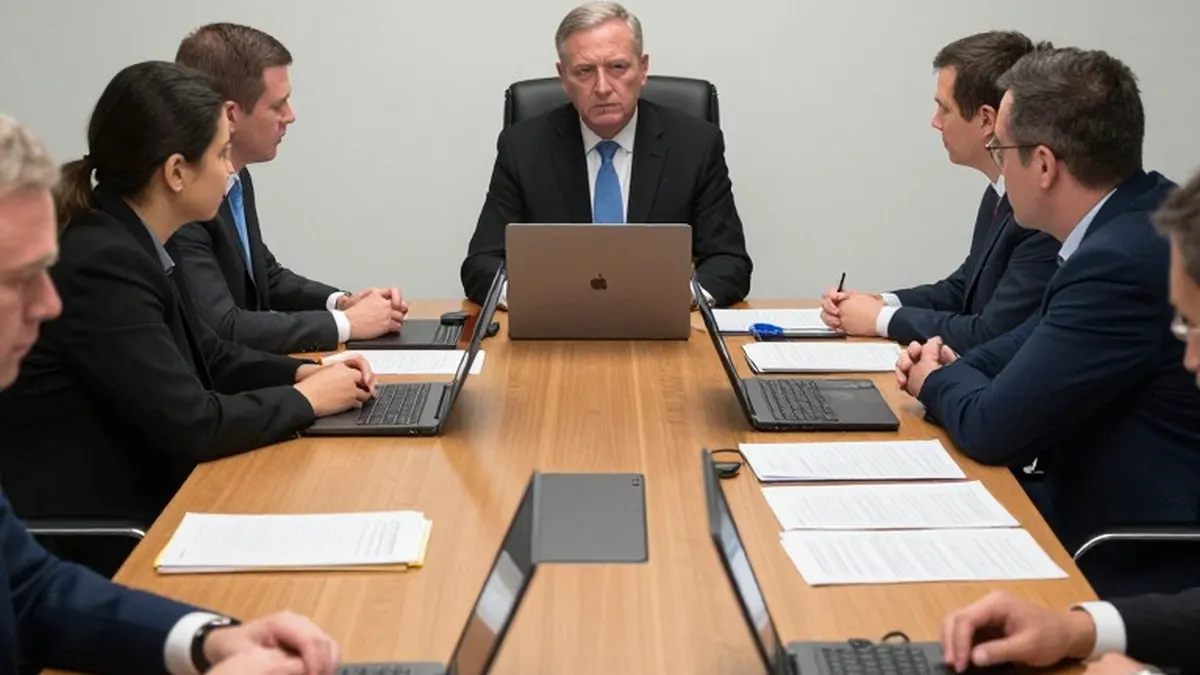
Prime Minister Benjamin Netanyahu is reportedly insisting that he serve as the sole leader of a potential unity government with Yashar party head Gadi Eisenkot. Hebrew media outlets reported on Friday that the Likud party has presented a comprehensive list of demands that highlights significant differences between the two political blocs. These conditions were conveyed during meetings earlier in the week between representatives of Likud and Yashar, who are currently exploring the possibility of forming a broader governing coalition.
Michael Rabello, a former personal lawyer to Netanyahu, was identified as the individual who presented the list of requirements. According to Channel 12 news, the document outlines Likud's starting position for negotiations. The most prominent demand is that Netanyahu remain in the role of prime minister for a full four years. This specific condition effectively rules out any rotational framework that would allow Eisenkot to eventually assume the premiership, a structure that has been a point of discussion in recent political deliberations.
The list also stipulates that the government must include parties across the political spectrum, ranging from the left-wing Democrats to the far-right Otzma Yehudit, led by National Security Minister Itamar Ben Gvir. However, the two Arab-led parties are to be excluded from the cabinet. Additionally, coalition partners are expected to provide full support for a future military offensive against Iran and to maintain the existing judicial overhaul legislation until a broader consensus is reached.
Further conditions include the establishment of a political rather than state commission of inquiry into the events of October 7, 2023. The list also calls for the advancement of a Haredi draft bill concerning conscription, based on the version proposed by the outgoing government. Other key points include maintaining the current conditions for Hamas Nukhba fighters, holding the Israel Defense Forces to its current lines in Gaza until the threat is neutralized, and requiring partners to sign statements opposing a Palestinian state while recognizing Israel as the nation state of the Jewish people.
Reactions from the Yashar bloc have been largely critical. Sources close to Eisenkot told the Haaretz daily that the proposal appeared to be more of a political strategy than a genuine attempt to form a government. They described the list as spin and noted the substantial gaps between Likud's demands and their own policy positions. In response, Likud disputed three specific claims regarding the investigative committee, judicial reform, and conscription, though they did not address the other reported conditions.
Eisenkot, who has been tasked with forming a government, has stated that he is open to a unity government but has ruled out joining a coalition led by Netanyahu. He is also considering a potential alliance with ultra-Orthodox parties. If these efforts fail, he has signaled an intention to form a minority government supported by the two Arab-led parties, Ra’am and the Joint List. This approach has drawn opposition from Avigdor Liberman, leader of the Yisrael Beytenu party, who has pledged to vote against such a configuration.
Liberman argued in a Channel 12 interview that a minority government reliant on Arab parties would ultimately benefit Netanyahu. He suggested that this path would allow the prime minister to return with greater strength. Instead, Liberman advocated for the Yashar-led bloc to join forces with the Shas and United Torah Judaism parties to achieve a bare majority of 61 seats in the 120-member Knesset. He expressed confidence that this coalition is achievable, despite recent denials of progress from United Torah Judaism and Shas's reluctance to leave its long-standing alliance with Likud.
The political landscape remains complex as Eisenkot seeks to build a stable majority. The tension between the desire for a broad unity government and the practical constraints of party alliances continues to shape the negotiations. As the deadline for forming a government approaches, the details of these demands will likely play a central role in determining whether a new government is formed or if the political process stalls.
Originally published by News Media House