Crescent Dunes Solar Plant Faces Second Bankruptcy After $1B Federal Investment
A Nevada solar facility backed by over $1 billion in federal funds has filed for bankruptcy again, potentially costing taxpayers up to $507.6 million.
By News Media House Staff ·
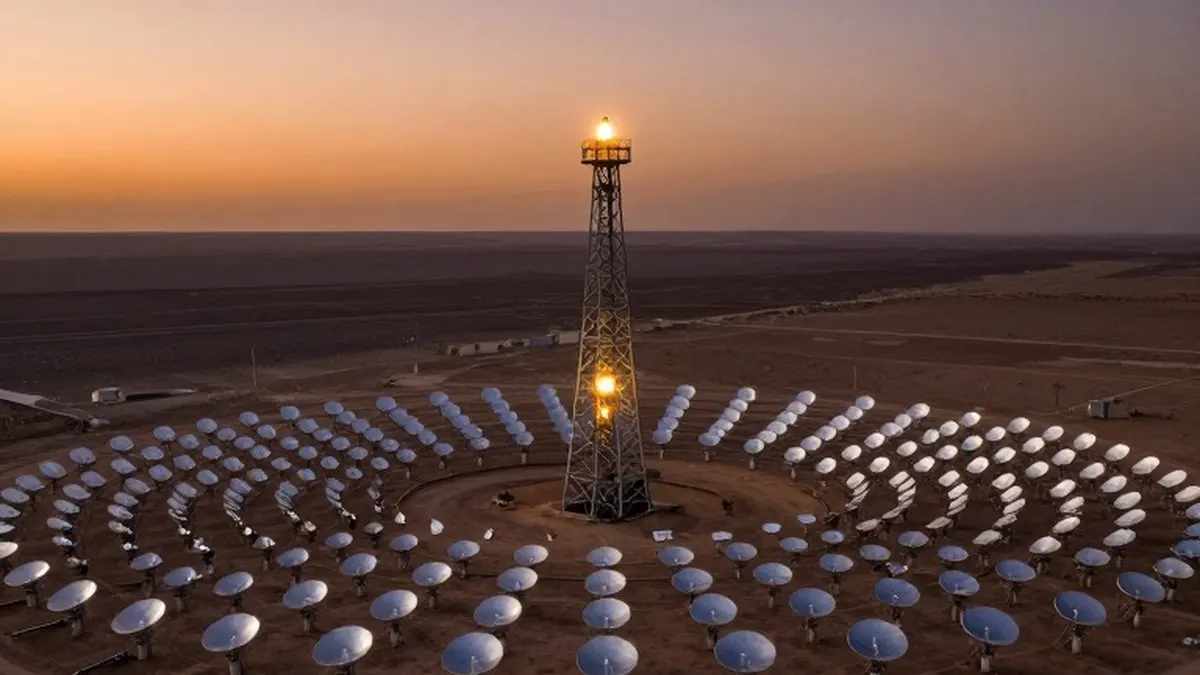
The Crescent Dunes Solar Energy Project in Nevada, once promoted as a clean energy breakthrough, has entered bankruptcy proceedings for the second time. The facility, located approximately 13 miles northwest of Tonopah, was sold for $7 million in July 2026. The estimated cost to federal taxpayers may reach $507.6 million, a figure that nearly matches the loss incurred from the Solyndra bankruptcy in 2011.
The plant occupies a 2,250-acre federal site in the desert and utilizes concentrated solar power technology. Instead of standard photovoltaic panels, it employs more than 10,000 mirrors to focus sunlight onto a 640-foot tower. This process heats molten salt to roughly 1,050 degrees Fahrenheit. The heated salt is stored in a large insulated tank, allowing the facility to generate electricity via steam turbines even after sunset. This design was intended to address the intermittency of solar power.
The Obama administration provided significant financial support to the project, including a $737 million loan guarantee from the Department of Energy and approximately $275 million in Treasury grants. These funds were part of a broader $90 billion initiative to stimulate the economy and combat climate change following the 2008 financial crisis. SolarReserve developed the project, while ACS Group’s Spanish subsidiary, Cobra, handled construction.
Operational difficulties emerged shortly after the plant began commercial operations in late 2015. A major leak in the molten-salt storage tank occurred in October 2016, forcing a shutdown. Although the plant resumed operations in July 2017, it continued to underperform. By 2018, its best full year of output through 2025, the facility generated only 41% of the projected annual electricity. Another tank failure in March 2019 led to the termination of its long-term power agreement with NV Energy, which contributed to its first bankruptcy in July 2020.
Following the 2020 restructuring, ACS Group took ownership through an affiliate, and Cobra assumed operational control. A turnaround plan aimed to restore production to 400,000 megawatt-hours annually. However, further leaks in 2022 and 2023 forced additional shutdowns. By January 2026, the plant returned to bankruptcy court. Sons of Liberty Construction, a Mississippi-based firm, purchased the asset for $7 million and is currently attempting to revive operations, though output remains below initial targets.
Debates over the cause of the failures have centered on construction quality versus technology design. Bill Gould, co-founder of SolarReserve, blamed the Spanish contractor for mismanagement and defective tank design. An unnamed engineer attributed the issues to problems with the conventional thermal equipment rather than the solar collection system. Oliver Hemmers, a physicist and former head of the Harry Reid Center for Environmental Studies, noted that large molten-salt tanks face significant material science challenges due to temperature-induced expansion and contraction.
To mitigate further damage, operators lowered the hot-salt tank temperature to around 850 degrees Fahrenheit when resuming operations in 2023. This reduction in temperature decreased electricity production and revenue. Meanwhile, the cost of conventional photovoltaic solar panels continued to fall, undercutting the economic viability of Crescent Dunes’ more complex technology.
The Department of Energy estimated its loss on the loan guarantee at $232 million after the 2020 bankruptcy settlement. When combined with the Treasury grants, the total federal exposure stands at approximately $507.6 million. The Department of Energy stated that it has had no ownership or financial interest in the project since 2020. A private lawsuit alleging fraud in the securing of Treasury grants was dismissed but is currently under appeal.
Policy experts remain divided on the wisdom of federal backing for such projects. Véronique de Rugy, an economist at George Mason University, argued that the government should not pick winners and losers in the energy sector, noting that politicians often take credit for openings but disappear when projects fail. Conversely, Nick Loris of C3 Solutions suggested that government financing can be justified to de-risk promising new technologies, provided that successes are weighed against failures across the broader loan portfolio.
The collapse of Crescent Dunes highlights the financial risks associated with publicly financed commercial energy projects. While the facility offers the advantage of post-sunset generation, its repeated mechanical failures and economic struggles have left taxpayers bearing a substantial portion of the investment cost.
Originally published by News Media House
More News · National news · Report a business · Got a Story?